


How can high-efficiency shell and tube heat exchangers enhance turbulence through baffle design?
Release Time : 2025-12-04
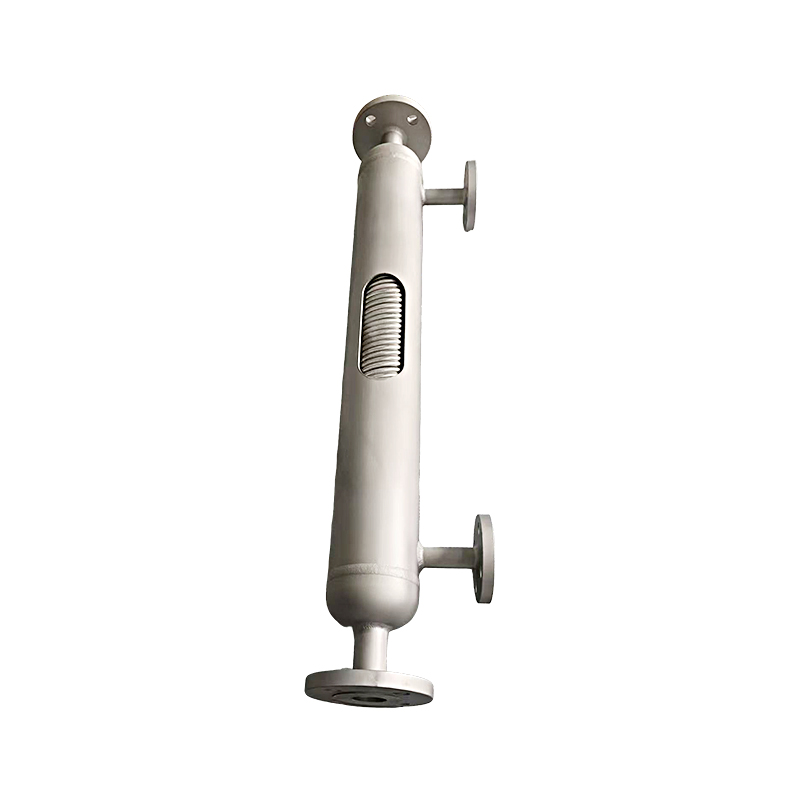
High-efficiency shell and tube heat exchangers, as core equipment in industrial heat exchange, rely heavily on the enhanced turbulence design of the shell-side fluid for improved heat transfer efficiency. Baffles, as key components, significantly enhance heat transfer performance by altering the fluid flow path and disrupting the laminar boundary layer. Their design logic and structural innovations together construct a highly efficient heat transfer system, becoming a core means of improving equipment performance.
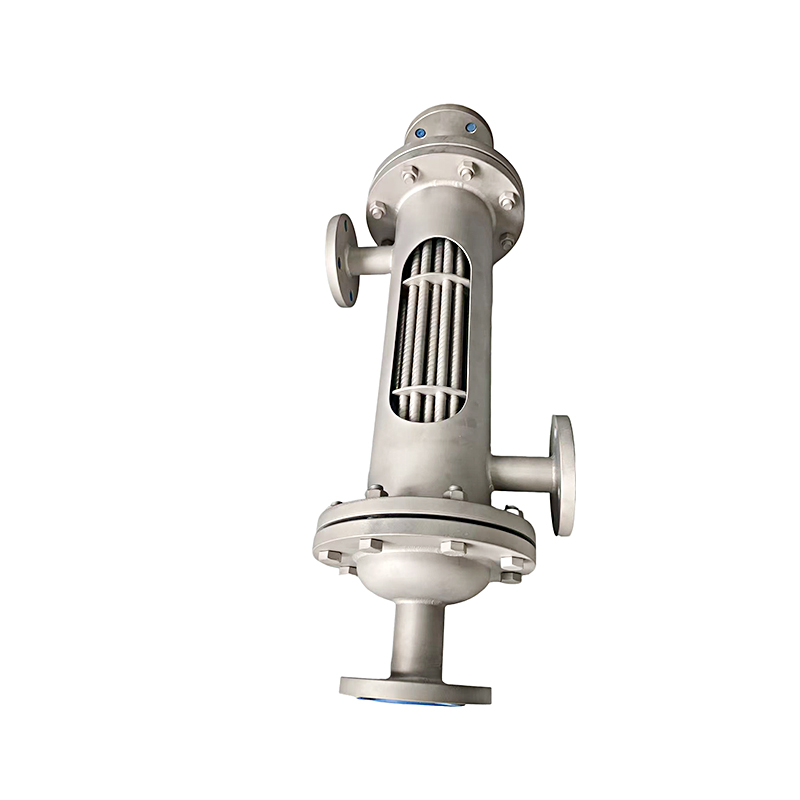
The core function of baffles is to force the shell-side fluid to change its flow direction, creating a turbulent field that laterally impacts the tube bundle. Traditional bow-shaped baffles, through their notch design, cause the fluid to flow in a "Z" shape within the shell side. When the fluid impacts the tube bundle, it experiences a sudden velocity change, disrupting the laminar boundary layer near the tube wall and thinning the stagnant layer with high thermal resistance, thereby increasing the heat transfer coefficient. This design causes the fluid to repeatedly deflect between the tubes, increasing the frequency and intensity of fluid disturbances, resulting in more efficient heat transfer. For example, in crude oil heating scenarios in oil refineries, bow-shaped baffles enhance the turbulence intensity of the shell-side fluid, allowing high-temperature steam to transfer heat to the crude oil in the shell side through the tubes, achieving efficient waste heat recovery.
To further optimize turbulence, the double-arched baffle increases the cutting area, improving the shell-side flow pattern from a single-arch crossflow to a parallel-crossflow. This design reduces tube bundle vibration caused by abrupt fluid bends, while increasing the flow area reduces local resistance, allowing for higher flow velocity at the same pressure drop. When handling high-viscosity fluids (such as heavy oil and syrup), the double-arched baffle maintains high turbulence intensity, avoiding dead zones caused by viscosity and ensuring stable heat transfer efficiency.
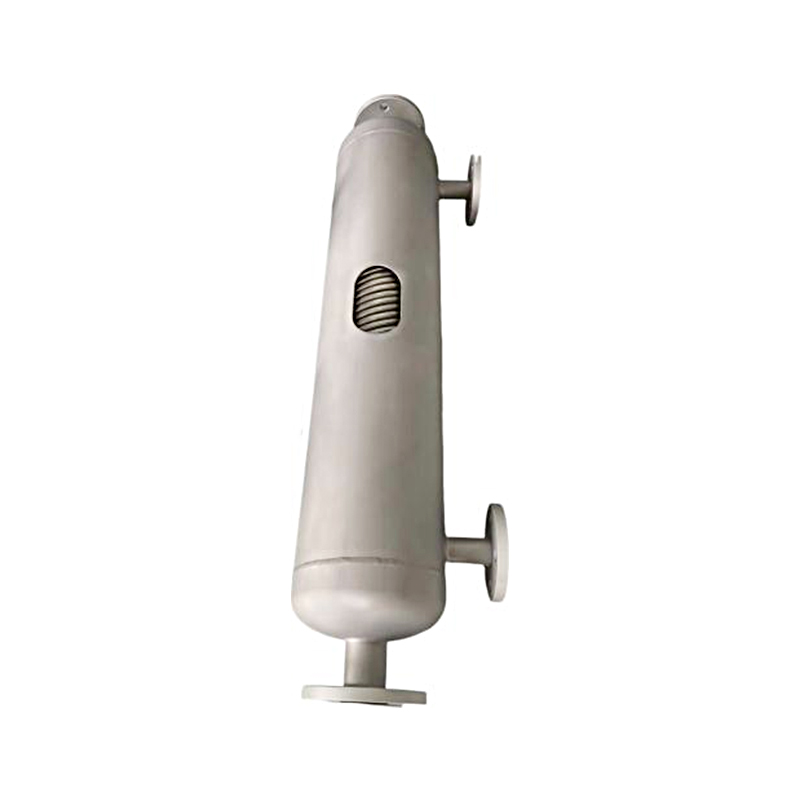
The spiral baffle breaks through the traditional transverse flow pattern, guiding the fluid in a plunger-like spiral flow through a continuous spiral surface. This design eliminates dead zones between traditional baffles, ensuring the fluid consistently flows along a spiral trajectory through the tube bundle, resulting in more uniform turbulence intensity. For example, in heat exchange scenarios with impurities (such as cooling water and pulp), the dead-zone-free characteristic of the spiral baffle reduces fouling, while the centrifugal force generated by the spiral flow keeps impurities away from the tube wall, extending the equipment cleaning cycle. Discontinuous spiral baffles are composed of multiple elliptical or sector-shaped plates, reducing manufacturing difficulty and allowing for optimized fluid distribution by adjusting the helix angle to accommodate fluids of varying viscosities.
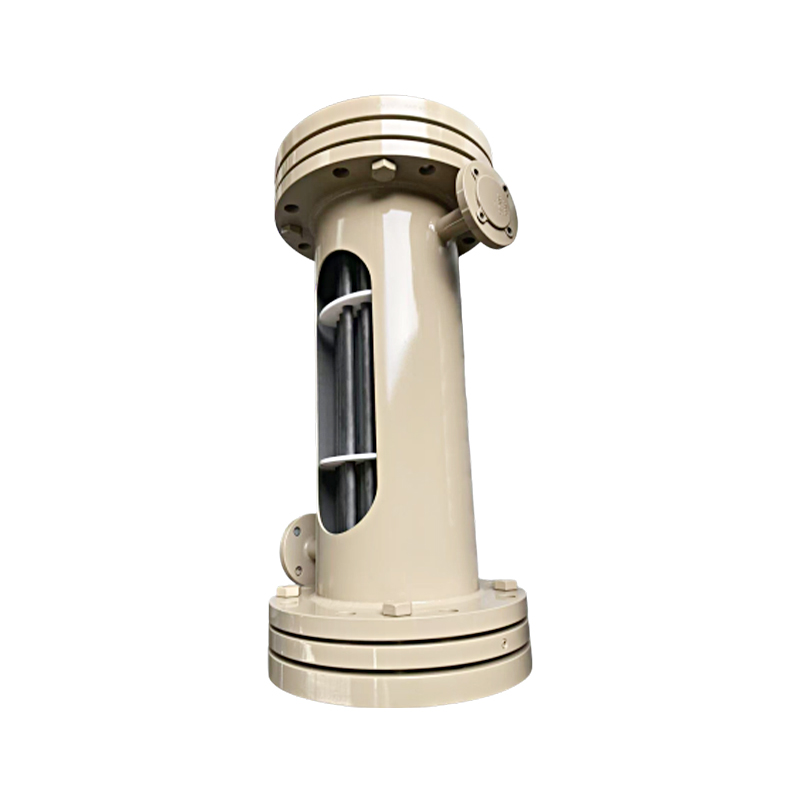
Baffle rod heat exchangers replace traditional baffles with rod-type support structures, changing the shell-side fluid flow direction to longitudinal (axial), fundamentally eliminating tube bundle vibration caused by crossflow. The baffle rods form four-point rigid supports between the tubes, keeping the tube's natural frequency away from the fluid excitation frequency and reducing crossflow resistance. In high-pressure, high-speed applications such as natural gas processing and refrigeration systems, baffle rod heat exchangers prevent vibration-induced leaks and reduce energy consumption by lowering pressure drop, achieving efficient and stable operation.
The baffle design of high-efficiency shell and tube heat exchangers also requires coordinated optimization with the tube-side structure. For example, multi-pass designs use internal baffles to divide the tube side into multiple fluid streams, increasing the flow velocity and turbulence intensity within the tubes, creating a "double-enhancing" effect with the turbulence field formed by the shell-side baffles. In the heat exchange module of a chemical reactor, a four-tube design enhances the turbulence intensity of the fluid within the tubes. Combined with the shell-side helical baffles, this significantly improves the overall heat transfer coefficient, meeting the precise temperature control requirements of high-temperature and high-pressure reactions.
Advances in materials and manufacturing processes have further driven innovation in baffle design. 3D printing technology enables the creation of complex flow channel structures (such as biomimetic sharkskin surfaces and fractal channels), greatly increasing the specific surface area and enhancing local turbulence. For example, a company's 3D-printed baffles feature surface microstructures that generate microscale vortices in the fluid, improving heat transfer efficiency. Simultaneously, carbon fiber winding technology enhances the equipment's pressure resistance, allowing helical baffle heat exchangers to be applied to high-pressure conditions such as supercritical carbon dioxide power generation.
The baffle design of high-efficiency shell and tube heat exchangers utilizes diverse structures such as bow-shaped, double-bow-shaped, helical, and baffle rod designs, combined with multi-tube synergistic optimization and advanced manufacturing processes, to achieve precise control of turbulence intensity. These designs not only improve heat transfer efficiency but also reduce pressure drop and vibration risks, extend equipment life, and provide efficient and reliable heat exchange solutions for industries such as petrochemicals, power, and refrigeration.