


What are the unique advantages of stainless steel spiral wound tube heat exchangers in dealing with thermal expansion and contraction?
Release Time : 2026-01-19
In industrial heat exchange equipment, thermal expansion and contraction caused by temperature changes are key factors affecting system safety, lifespan, and efficiency. Traditional shell-and-tube or plate heat exchangers often experience thermal stress concentration due to uneven material expansion under drastic temperature changes, leading to weld cracking, seal failure, and even structural deformation. Stainless steel spiral wound tube heat exchangers, with their unique geometric configuration and flexible tube bundle design, demonstrate significant advantages in dealing with thermal expansion and contraction, becoming a representative of high-reliability, long-life heat exchange solutions.
1. The spiral structure provides natural "flexible compensation" capability
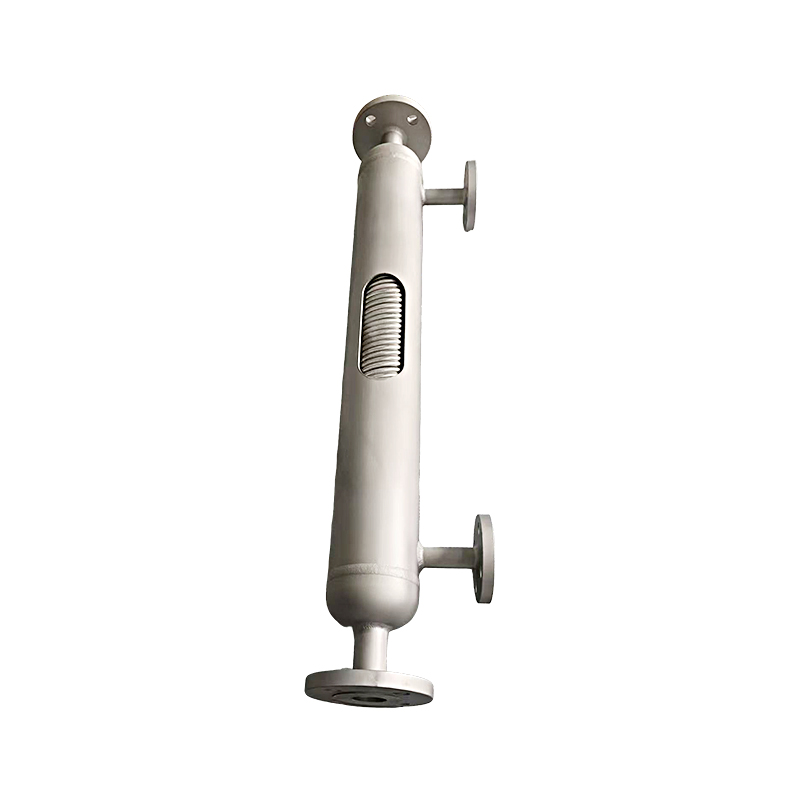
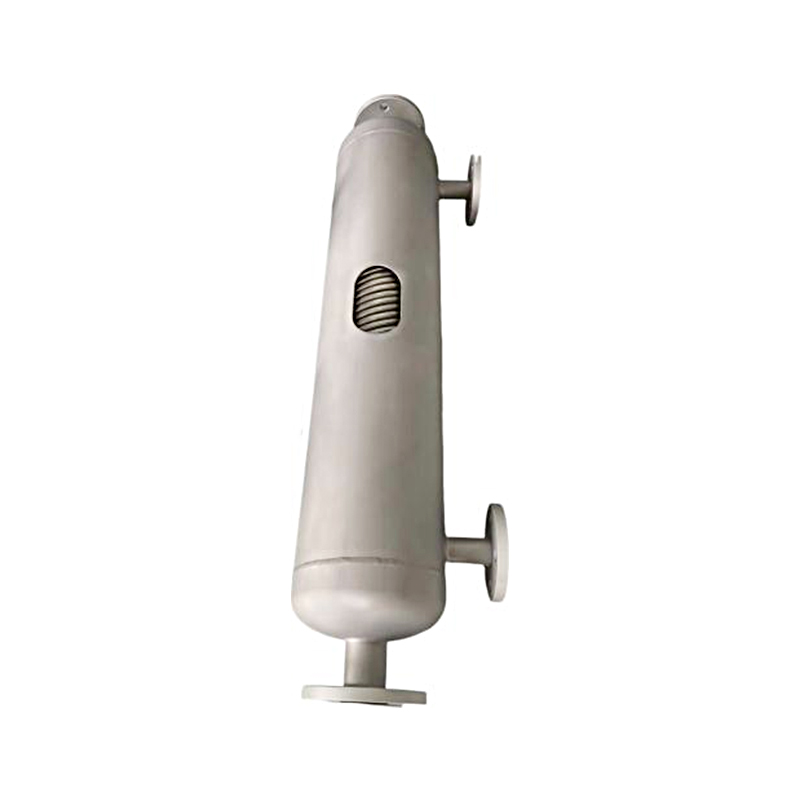
The core of the stainless steel spiral wound tube heat exchanger lies in its heat exchange tubes, tightly wound into a cylindrical bundle with a specific pitch and angle. This three-dimensional spiral layout is not rigidly fixed but possesses a certain degree of elastic freedom in the axial and radial directions. When hot and cold fluids alternately pass through, the tube wall temperature changes rapidly, causing the material to expand or contract accordingly. In straight tube structures, this deformation is constrained by the shell, easily generating enormous internal stress. In helical structures, however, the tubes can "release" thermal strain through minute axial expansion and contraction, radial displacement, and even local torsion. This adaptive deformation mechanism is essentially a built-in thermal compensation method that eliminates the need for additional expansion joints, effectively avoiding stress concentration and fatigue damage.
2. Elastic Tube Bundles Achieve Dynamic Stress Equilibrium
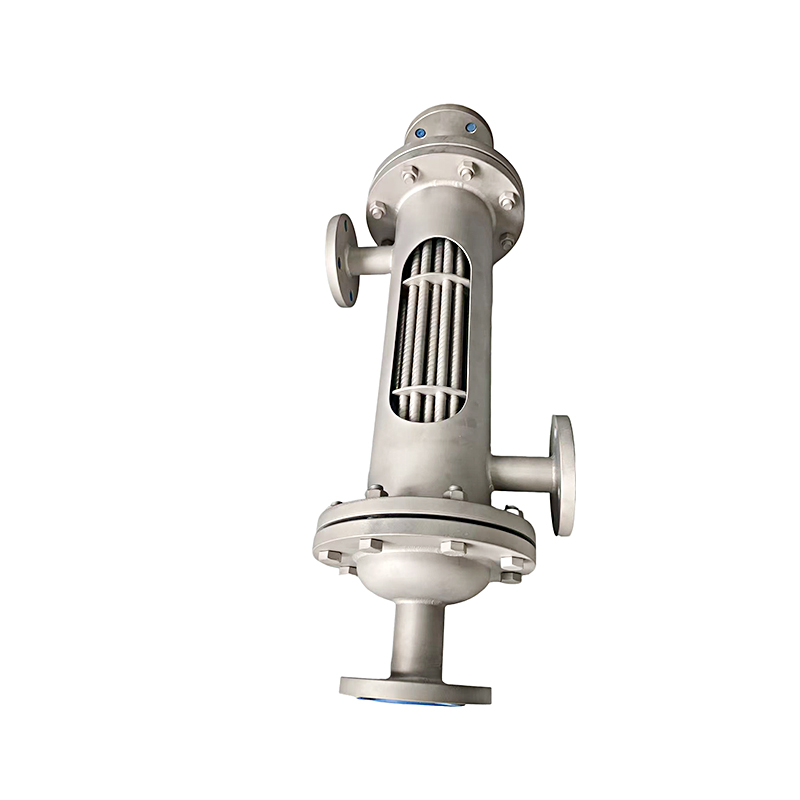
These heat exchangers typically use thin-walled stainless steel tubes precisely wound together. Although the tube walls are thin, they possess high strength and excellent ductility. More importantly, the entire tube bundle, as a whole, has a "spring-like" structure, exhibiting elastic properties similar to a mechanical spring. When the temperature rises and causes the entire tube bundle to expand, the number of helical turns and the pitch can be finely adjusted to absorb axial displacement; it can also rebound and return to its original position during cooling and contraction. This elastic behavior ensures that thermal stress is evenly distributed throughout the tube bundle, rather than concentrated at a single point, thus significantly reducing the risk of localized failure. This characteristic significantly improves the durability of the equipment, especially in systems with frequent start-ups and shutdowns and variable operating conditions.
3. Eliminating Dependence on Expansion Joints and Enhancing Sealing Reliability
Traditional fixed tubesheet heat exchangers often require expensive and leak-prone expansion joints to cope with thermal expansion and contraction. However, the stainless steel spiral wound structure achieves thermal compensation through its own geometric flexibility, eliminating this weak link. The entire unit typically employs a fully welded sealing design, with no gaskets or flanges, fundamentally preventing problems such as loosening of the sealing surface or gasket aging caused by thermal cycling. This not only simplifies the structure but also significantly improves operational reliability in high-temperature, high-pressure, or cleanroom environments.
4. Synergistic Enhancement of Fatigue Resistance through Material and Structure
Stainless steel itself possesses excellent high-temperature strength and a low coefficient of thermal expansion, while spiral winding further optimizes its thermodynamic response. Experiments show that after hundreds of thermal cycles from room temperature to above 150°C, high-quality spiral wound heat exchangers show no significant plastic deformation or crack initiation. Their fatigue life far exceeds that of traditional structures, making them particularly suitable for processes with drastic temperature fluctuations, such as waste heat recovery, steam condensation, and heat pump systems.
In summary, the stainless steel spiral wound tube heat exchanger, through its unique spiral geometry and elastic tube bundle mechanism, transforms the destructive stress caused by thermal expansion and contraction into controllable elastic deformation, achieving a "soft-to-hard" thermal management philosophy. This inherently adaptive thermal stability, requiring no external compensation components, not only extends equipment lifespan but also enhances system safety and maintenance economy. In modern industry, where efficient, compact, and reliable heat exchange is sought after, this structural advantage is making it the preferred choice for an increasing number of high-end applications.
1. The spiral structure provides natural "flexible compensation" capability
The core of the stainless steel spiral wound tube heat exchanger lies in its heat exchange tubes, tightly wound into a cylindrical bundle with a specific pitch and angle. This three-dimensional spiral layout is not rigidly fixed but possesses a certain degree of elastic freedom in the axial and radial directions. When hot and cold fluids alternately pass through, the tube wall temperature changes rapidly, causing the material to expand or contract accordingly. In straight tube structures, this deformation is constrained by the shell, easily generating enormous internal stress. In helical structures, however, the tubes can "release" thermal strain through minute axial expansion and contraction, radial displacement, and even local torsion. This adaptive deformation mechanism is essentially a built-in thermal compensation method that eliminates the need for additional expansion joints, effectively avoiding stress concentration and fatigue damage.
2. Elastic Tube Bundles Achieve Dynamic Stress Equilibrium
These heat exchangers typically use thin-walled stainless steel tubes precisely wound together. Although the tube walls are thin, they possess high strength and excellent ductility. More importantly, the entire tube bundle, as a whole, has a "spring-like" structure, exhibiting elastic properties similar to a mechanical spring. When the temperature rises and causes the entire tube bundle to expand, the number of helical turns and the pitch can be finely adjusted to absorb axial displacement; it can also rebound and return to its original position during cooling and contraction. This elastic behavior ensures that thermal stress is evenly distributed throughout the tube bundle, rather than concentrated at a single point, thus significantly reducing the risk of localized failure. This characteristic significantly improves the durability of the equipment, especially in systems with frequent start-ups and shutdowns and variable operating conditions.
3. Eliminating Dependence on Expansion Joints and Enhancing Sealing Reliability
Traditional fixed tubesheet heat exchangers often require expensive and leak-prone expansion joints to cope with thermal expansion and contraction. However, the stainless steel spiral wound structure achieves thermal compensation through its own geometric flexibility, eliminating this weak link. The entire unit typically employs a fully welded sealing design, with no gaskets or flanges, fundamentally preventing problems such as loosening of the sealing surface or gasket aging caused by thermal cycling. This not only simplifies the structure but also significantly improves operational reliability in high-temperature, high-pressure, or cleanroom environments.
4. Synergistic Enhancement of Fatigue Resistance through Material and Structure
Stainless steel itself possesses excellent high-temperature strength and a low coefficient of thermal expansion, while spiral winding further optimizes its thermodynamic response. Experiments show that after hundreds of thermal cycles from room temperature to above 150°C, high-quality spiral wound heat exchangers show no significant plastic deformation or crack initiation. Their fatigue life far exceeds that of traditional structures, making them particularly suitable for processes with drastic temperature fluctuations, such as waste heat recovery, steam condensation, and heat pump systems.
In summary, the stainless steel spiral wound tube heat exchanger, through its unique spiral geometry and elastic tube bundle mechanism, transforms the destructive stress caused by thermal expansion and contraction into controllable elastic deformation, achieving a "soft-to-hard" thermal management philosophy. This inherently adaptive thermal stability, requiring no external compensation components, not only extends equipment lifespan but also enhances system safety and maintenance economy. In modern industry, where efficient, compact, and reliable heat exchange is sought after, this structural advantage is making it the preferred choice for an increasing number of high-end applications.