


How to design baffle structures in high-efficiency shell and tube heat exchangers to reduce the risk of fluid-induced vibration?
Release Time : 2026-02-02
In high-efficiency shell and tube heat exchangers, the design of the baffle structure is crucial for reducing the risk of fluid-induced vibration. Fluid-induced vibration is mainly caused by vortex shedding and turbulent excitation resulting from the lateral scouring of the tube bundle by the shell-side fluid, which can lead to tube wear, fatigue fracture, and even equipment failure. Therefore, baffles need to be optimized in layout, adjusted in geometry, and improved in structural form to weaken vibration excitation at its source and enhance the stability of the tube bundle support.
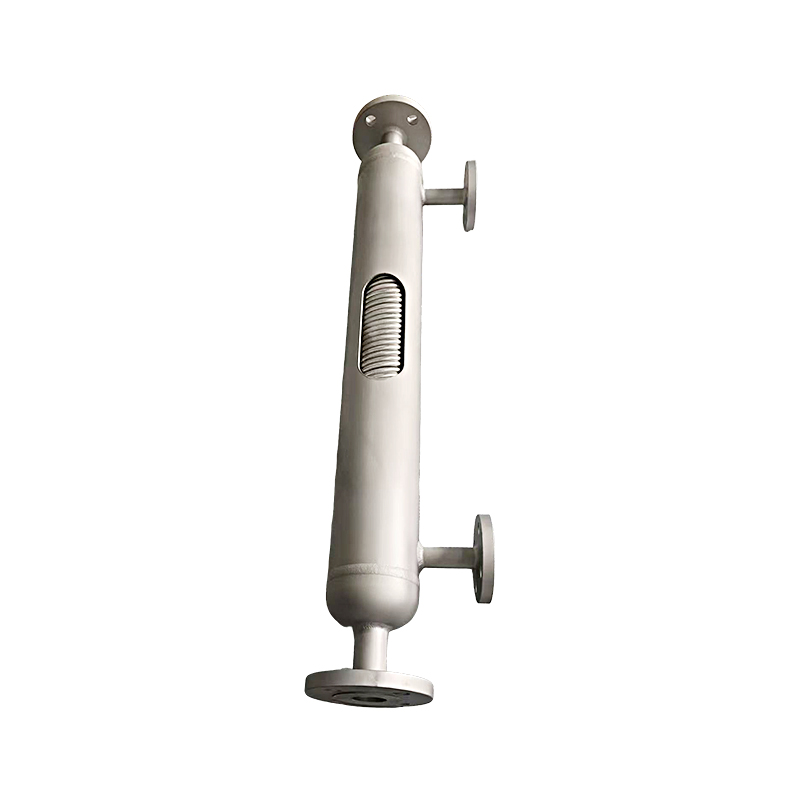
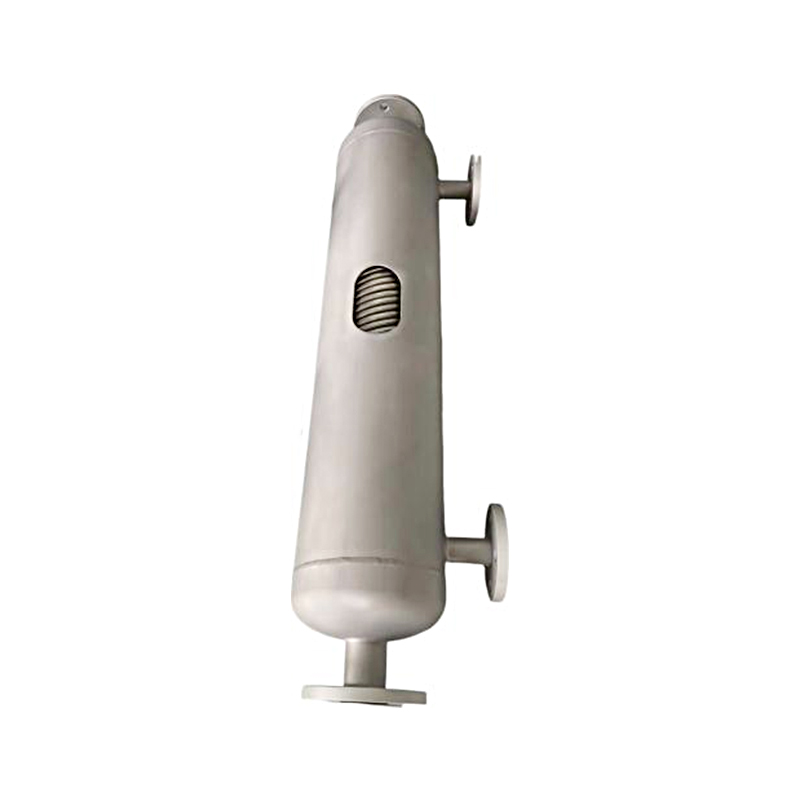
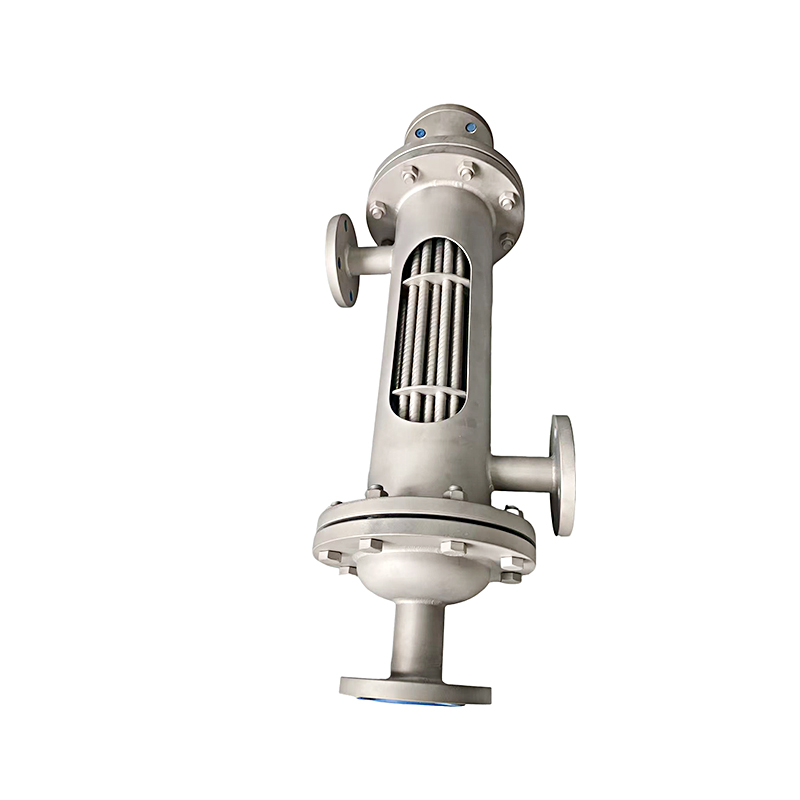
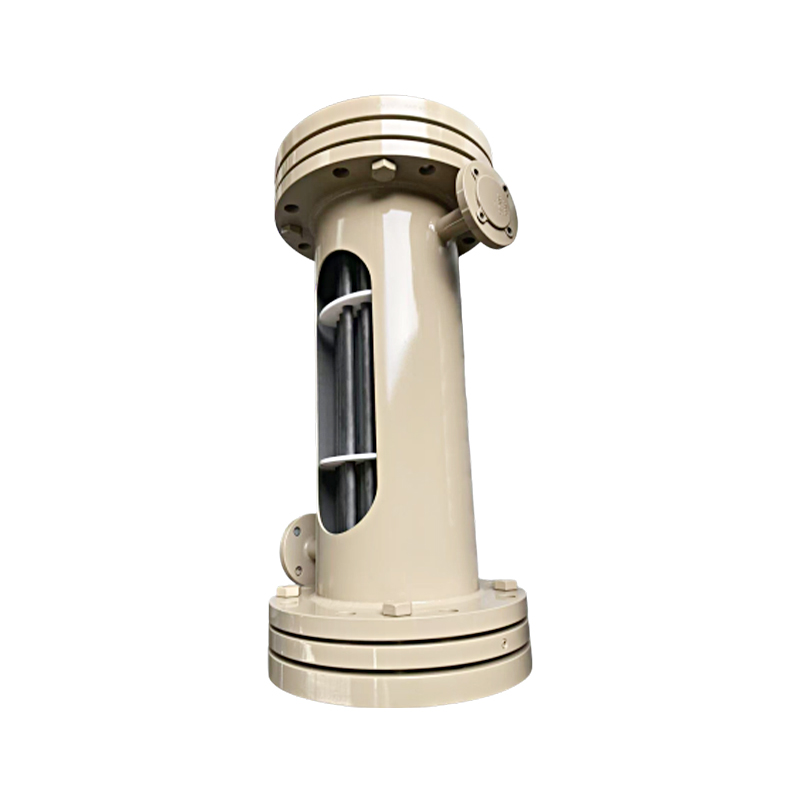
While traditional bow-shaped baffles can improve heat transfer efficiency, their lateral cutting of the fluid can easily lead to excessively high local flow velocities, exacerbating the coupling risk between the vortex shedding frequency and the tube bundle's natural frequency. To mitigate this problem, helical baffles or baffle rod structures can be used instead. Helical baffles guide the fluid to flow in an axial spiral pattern through continuous helical surfaces, preventing the formation of high-speed jets at the baffle gaps, thereby reducing lateral impact forces and vortex-induced vibration intensity. The baffle structure replaces traditional baffles with thin rods, allowing the fluid to flow parallel to the tube bundle axis, fundamentally eliminating vibration sources induced by lateral flow, while simultaneously reducing pressure drop and improving heat transfer uniformity.
The geometric parameters of the baffles directly impact vibration risk. For example, the baffle notch height needs to be determined comprehensively based on the shell-side fluid velocity and tube bundle span: an excessively high notch can lead to fluid short-circuiting and reduced heat transfer efficiency; an excessively low notch may cause strong vibrations due to excessively high flow velocities. It is generally recommended that the notch height be a specific proportion of the shell's inner diameter, and its rationality should be verified through fluid dynamics simulations. Furthermore, the clearance between the baffle tube openings and the heat exchange tubes must be strictly controlled. An excessively large clearance will exacerbate collision wear during tube bundle vibration; an excessively small clearance may cause tube jamming due to thermal expansion. Generally, a small clearance fit is used, with chamfering or elastic sleeves machined at the tube opening edges to absorb vibration energy and reduce stress concentration.
The spacing of the baffles must balance heat transfer requirements and vibration control. Equal spacing is a common arrangement, but the spacing needs to be adjusted according to the tube bundle span and fluid velocity: too small a spacing will restrict fluid flow space and increase pressure drop; too large a spacing may lead to increased tube bundle vibration due to insufficient support. For vibration-prone conditions, a variable spacing arrangement can be used, i.e., denser baffles in the middle of the tube bundle to enhance support, and appropriately wider spacing at both ends to reduce flow resistance. Simultaneously, the baffles at both ends of the tube bundle should be as close as possible to the shell-side inlet and outlet nozzles to reduce the direct impact of local high-speed fluid on the tube bundle.
In multi-pass heat exchangers, baffles need to be designed in conjunction with the tube box structure to avoid vibration caused by sudden changes in fluid direction due to flow switching. For example, in U-tube heat exchangers, baffles need to maintain an appropriate distance from the U-shaped bend area to prevent periodic oscillation of the bend due to fluid impact. Furthermore, for fluids containing solid particles or prone to scaling, the baffle surface needs to be treated with anti-wear agents, such as spraying a wear-resistant coating or installing anti-wear plates, to reduce particle erosion and wear on the tube bundle, thereby reducing the risk of vibration due to wear.
The design of baffles in high-efficiency shell and tube heat exchangers needs to be optimized through a combination of experimental verification and numerical simulation. By establishing a three-dimensional flow field model, the fluid velocity distribution, pressure gradient, and vortex shedding frequency under different baffle structures are analyzed. Combined with tube bundle modal analysis, the natural frequencies are determined to avoid resonance risks. At the same time, manufacturing process and cost constraints must be considered to ensure that the design scheme meets vibration control requirements and is also engineering feasible.